Brainwaves by Burak Büyükdemir
Field notes from 26 years of investing in early-stage startups.
April 03, 2026
Why most customer interviews are a waste of time
· · ·
|
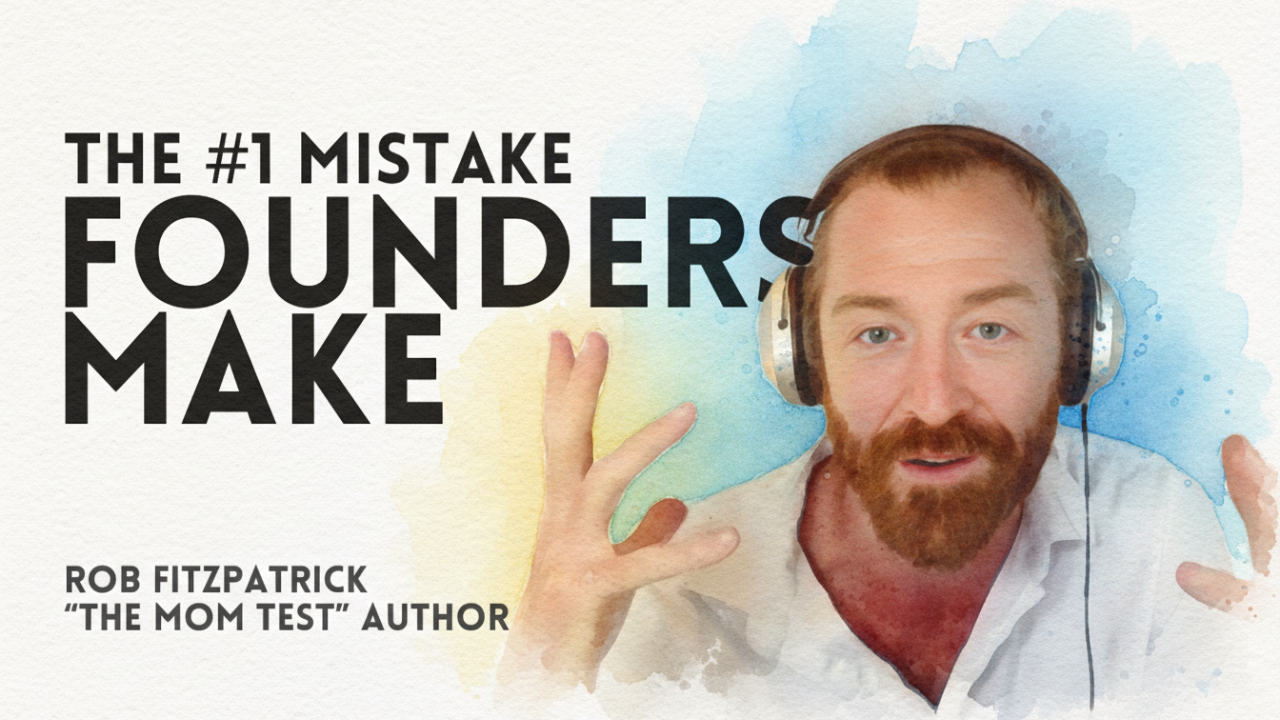
About the Guest: Rob Fitzpatrick is the author of The Mom Test (250K+ copies sold, taught at top universities and accelerators worldwide), a Y Combinator alumni, and founder of Useful Books. He went from a failed startup to writing the definitive guide on customer conversations. |
Rob Fitzpatrick built a failed startup, turned the lessons into a bestselling book, and explained where founders go wrong.
I sat down with Rob Fitzpatrick, author of The Mom Test.
He was part of YC’s 2007 batch, alongside companies like Dropbox and Disqus. His startup failed. But the lessons from that failure turned into one of the most recommended books in the startup world. It has sold more than 250,000 copies and is used by accelerators and universities around the world.
What Rob explained in our conversation was simple:
Most founders do talk to customers.
They just do it badly.
They ask for opinions. They chase compliments. They confuse politeness with demand. And then they build based on signals that were never real in the first place.
Here are the parts that mattered most.
· · ·
1. Stop chasing fake signals
When someone says:
“Great idea.”
“I’d use this.”
“This sounds interesting.”
Most founders feel encouraged.
Rob says this is usually a bad sign.
It often means the conversation has shifted from their life to your product. Once that happens, people try to be kind. They give compliments. They make hypothetical promises. They talk about what they might do instead of what they have actually done.
That is where founders get misled.
Bad: “What do you think about my idea?”
Good: “Can you walk me through the last time you dealt with this problem?”
That one shift does a lot of work.
Instead of opinions, you get behavior.
Instead of politeness, you get evidence.
Rob’s point is simple: the future is cheap, the past is real. So instead of asking whether someone would pay, ask what they already tried, what they are using now, what it cost them, and how serious the pain really is.
If someone says they tried multiple tools and spent real money, that matters.
If they say they never really did anything about it, that matters too.
Both answers are useful.
But only if you stop asking for validation.
· · ·
2. Create a safe conversation, not a sales meeting
This was the strongest part of the episode for me.
Rob explained how to start a conversation without putting the other person into defense mode.
His structure is simple:
Vision: explain the space you are exploring
Weakness: admit you are still figuring it out
Pedestal: show respect for their experience
Ask: ask about what they actually did
Example:
“I’m working on something to improve publishing for indie authors. I don’t have anything to sell yet. I’m still trying to understand the problem better. You’ve spent a lot of time in this space. Can you tell me how you handled this last time?”
That works because it lowers pressure.
It does not feel like a pitch.
It feels like an honest request for help.
And that changes the quality of the answers.
People do not like being sold to.
But many people are willing to help if the conversation feels real.
A lot of founders think customer interviews fail because they asked the wrong questions.
Sometimes they fail because they created the wrong setting.
· · ·
3. Ask the question you are avoiding
Rob said every important conversation usually has one question you do not want to ask.
Because it might make things awkward.
Because it might kill the momentum.
Because it might reveal that the customer does not care.
Something like:
“It seems like you may not need this that much. Why would you pay for it?”
Most founders avoid that question because the meeting feels positive and they do not want to ruin the mood.
That is a mistake.
If you ask it, one of two things happens.
Either they confirm they do not care, which saves you months.
Or they explain why they do care, and that often gives you the real value proposition in their own words.
That is much more useful than leaving the meeting with a vague sense of encouragement.
Rob keeps it simple: a few learning goals and one hard question written down before the meeting. That is enough to stay honest.
· · ·
4. You do not need endless interviews
Another useful point: customer development should help you move faster, not slower.
Rob pushed back on the idea that founders should stop everything and do endless interviews before building. You are not trying to reach perfect certainty. You are trying to reduce blindness enough to make a better next move.
Talk to a few real users.
Learn something real.
Build.
Talk again.
Run learning and building in parallel.
That is a healthier rhythm than hiding in research mode and calling it progress.
· · ·
|
|
Free Guide
The Founder Compensation Playbook
How to pay yourself, hire your first team, and use equity without guessing. A strategic guide for early-stage founders to build a compensation system that protects runway, ensures fairness, and attracts the right talent.
Download Free Guide →
|